


Normal
0
false
false
false
FR
X-NONE
X-NONE
/* Style Definitions */
table.MsoNormalTable
{mso-style-name:”Table Normal”;
mso-tstyle-rowband-size:0;
mso-tstyle-colband-size:0;
mso-style-noshow:yes;
mso-style-priority:99;
mso-style-parent:””;
mso-padding-alt:0cm 5.4pt 0cm 5.4pt;
mso-para-margin:0cm;
mso-pagination:widow-orphan;
font-size:10.0pt;
font-family:”Times New Roman”,serif;
mso-ansi-language:FR;
mso-fareast-language:FR;}
By Nikolaos
Sitaropoulos
Introductory
remarks
At the 130th
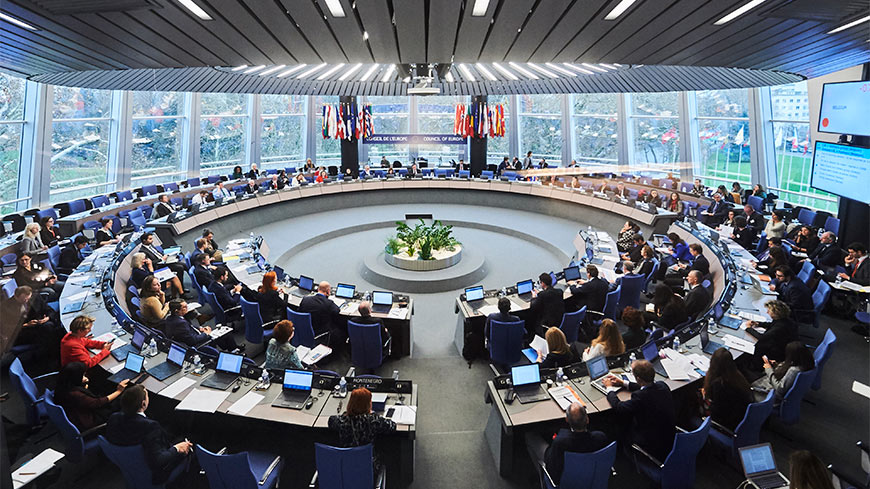
Session of the Council of Europe Committee of Ministers (CM) which was held in
Athens in November 2020, the CM adopted decisions on Securing
the long-term effectiveness of the ECHR system which underlined “the extraordinary contribution of the
Convention system to the protection and promotion of human rights and the rule
of law in Europe…as well as its central role in maintaining and fostering
democratic stability across the Continent”.
The CM stressed member states’
responsibility to resolve the systemic and structural human rights problems
identified by the Court in its judgments. The states parties to ECHR were called on in particular to give full effect
to the principle of subsidiarity (which Protocol No 15 to the ECHR inserted in the Convention’s preamble) by complying with their
Convention obligations and abiding by the judgments of the ECtHR. The CM also recalled
the importance of existence at national level of an efficient capacity for
rapid execution of the ECtHR judgment, recalling the relevant CM Recommendation
CM/Rec(2008)2.
These issues were echoed in
the decisions adopted by the CM in May 2021 at
its 131st Session in Hamburg which additionally highlighted the
increased complexity and challenges posed by non-execution or “persistent
refusal” to execute ECtHR judgments, and by inter-state disputes which are on
the rise. As shown below, the crucial importance of all these questions and the
need to reinforce the execution process in Strasbourg and especially “at home” are
confirmed by the 2021 Annual Report on the execution of the ECtHR
judgments (‘2021 Annual Report’) issued by the CM on 30 March 2022.
Major
advances in the execution of the ECtHR judgments
According
to the 2021 Annual Report, in 2021 there were 1,379 new judgments (an increase
of 40% compared to 2020) delivered by the ECtHR and forwarded to the CM for execution
supervision under Article 46§2 ECHR. As of end 2021 there were 5,533 ECtHR
judgments under supervision by the CM. This number is a bit higher than those
of 2019 (5,231) and 2020 (5,233) but still one of the lowest since 2007
(6,711). The fact that a case is pending before the CM does not in fact mean
that the respondent state has not taken any measure for the execution of the relevant
ECtHR judgment (individual measures to provide full redress to the applicant,
and general measures to prevent recurrence of similar ECHR violations). Most
often, the “pending case” status means either that measures adopted are under
assessment by the CM and/or more measures appear to be necessary and are under
consideration.
Every year the CM records a plethora of
measures taken and reforms undertaken or completed by respondent states in
order to fully comply with the ECtHR judgments (see e.g. “Main Achievements” in country
factsheets). Indeed it is rather an understatement to say
that the number and range of law and policy-related changes which have occurred
in European states over decades following ECtHR judgments are impressive and on
many occasions groundbreaking. The 2021 Annual Report (chapter II) highlights examples
of major advances recorded last year which
include the following: Romania
abolished prescription for torture by amending legislation, in line with the ECtHR
case-law and the CM decisions in Al Nashiri. A similar legislative change took place in Armenia (Virabyan and Muradyan groups
of cases, in
effect in 2022) and is planned by North Macedonia (Kitanovski group of cases). France
adopted a law providing for a new judicial remedy concerning poor conditions of
detention, following the ECtHR judgment in J.M.B. and Others. Wide-ranging measures to enhance investigations into
hate (especially homophobic) crime were recorded in the context of execution of
Beizaras and Levickas v.
Lithuania.
Another major
positive development recorded in 2021 was the reinforcement of the
participatory nature and transparency of the execution process especially
through communications submitted to the CM by European civil society
organisations and National Human Rights Institutions (NHRIs). The submission of
such communications is possible since 2006 under Rule 9.2 of the CM Rules on the supervision of
execution of the ECtHR judgments. In 2021 these communications reached 207
concerning 27 states. This is a significant increase, bearing in mind that
until 2019 these communications were never more than 90. It reflects and
confirms also the importance of NHRIs and the
valuable contribution of civil society
organisations to the promotion and protection of the rights enshrined in the
Convention, stressed by the CM in its above-mentioned decisions adopted in
Athens at its 130th Session.
In this
context one may note that the “Rule 9.2” communications submitted by NHRIs, compared
to those submitted by NGOs, remain at a low level (11 received in 2021 and 14
received in 2020). However, in the last couple of years there has been an
increased interest by NHRIs in the execution process. In 2021 the European
Network of NHRIs (ENNHRI) created the first interactive resource
hub with guidance on the implementation of ECHR judgments, which was supported
by the Department for the Execution of ECtHR judgments. This on-line hub aims to
support and guide NHRIs in their efforts to enhance their work on the
implementation of the ECtHR judgments at national and international level. It
contains a compilation of resources and tools on execution of
the ECtHR judgments as well as information on good practices by NHRIs in this
field.
Major challenges
with which the execution process is faced
Several systemic and
structural human rights problems persist and remain on the CM supervision
agenda for many years, despite the efforts made by respondent states and
advances which have occurred. The persistence of such issues adversely affects the
caseload of the ECtHR which, as a result, receives repetitive applications
(raising structural/general problems already examined by the Court) and
delivers repetitive judgments, then relayed to the CM to supervise their
execution. Although the number of repetitive judgments pending before the CM as
of end 2021 (4,233) is almost half compared to the 2011-2016 figures, there is
a trend of increase since 2019 (see statistics section C.1 of 2021 Annual
Report).
As noted in the 2021 Annual
Report, major issues concerning the functioning of the judicial system
scored high among the main themes of “leading cases” in “enhanced supervision”: cases concerning excessive length of judicial
proceedings constituted 8% while cases related to non-enforcement of domestic
judicial decisions constituted 3%. Already in the 2011 Annual report these
themes were recorded among the major ones examined by the CM, but the
respective percentages were higher (21,61% and 9,52%). Also, in 2021 12% of all
leading cases in the enhanced supervision procedure concerned actions of
(mainly ill-treatment by) security forces and/or ineffective investigations,
this being the highest percentage of such cases under supervision. By way of
comparison, in 2011 these cases constituted 13,92%. Lastly, poor conditions of detention (and lack
of effective remedies) represented again in 2021 one of the highest percentages
of leading cases in enhanced supervision (8%). In 2011 the relevant percentage
was 11,36%.
The tackling and resolution of
such systemic and structural human rights problems are linked, to a very high
degree, to the respondent states’ capacity to act and, above all, coordinate rapidly
action necessary in order to adopt general measures able to prevent recurrence
of similar violations. The 2020
Annual Report (chapter II) had indicated that despite progress
achieved in recent years in this domain, there are two major challenges
identified in national practice. First, the status and resources of the
national coordinator (usually this is the Government Agent before the ECtHR).
Secondly, these coordinator’s capacity in identifying the necessary execution
measures and promptly preparing the action plans and reports, in cooperation
with all competent national authorities.
Furthermore, other statistical
data contained in the 2021 Annual Report (statistics – sections E.1 and G.2)
give rise to concern. First, they indicate that there are delays in the
submission by respondent states of action plans or reports. In fact, in 2021 84
relevant “reminder letters” were sent by the Secretariat (Department for the
Execution of ECtHR judgments) to 16 states, while in 2020 48 such letters had
been dispatched to 19 states. Secondly, there has been a steady increase of cases
in which delays occur in the submission by states to the CM of information
concerning payment of just satisfaction awarded by the ECtHR. In 2021 there
were 1,772 such cases, while in 2020 and 2019 they were 1,602 and 1,423
respectively.
Another
major challenge to the execution process and the whole ECHR system are the
inter-state and individual cases related to post-conflict situations or
unresolved conflicts. Such cases are by definition highly complex and politically
sensitive, often examined by the CM in more than one of its four annual Human
Rights meetings. It is to be noted that (conflict related) inter-state
applications before the ECtHR are on the rise and ten such cases were pending at the ECtHR as of end
2021. Since 2020 an expert committee of the CDDH (Steering Committee for Human Rights) in the
Council of Europe has been working on proposals to enhance the effective
processing and resolution of cases relating to inter-state disputes and
individual applications arising from such situations.
In 2021 a
new (third) inter-state case, Georgia v. Russia (II) was added to the agenda of the CM
and scheduled to be examined in 2022 in a Human Rights meeting. It concerns
various violations of the Convention in the context of the armed conflict
between Georgia and Russia in August 2008. Two other inter-state cases examined by
the CM in 2021 were the following: Georgia v. Russia (I) concerning the arrest, detention
and expulsion from Russia of large numbers of Georgian between September
2006 and January 2007; Cyprus v. Turkey,
concerning various violations in relation to the situation in the northern part
of Cyprus since the military intervention by Turkey in 1974. Related individual
cases which were again in 2021 on the CM
Human Rights meetings’ agenda were: Xenides-Arestis group of cases
v. Turkey concerning
mainly the continuous denial of access to property in the northern part of
Cyprus and the consequent loss of control thereof; the Kakoulli and Isaak groups of cases v. Turkey, concerning
the 1996 killings of Greek Cypriots by Turkish or Turkish-Cypriot security
forces. In 2021 the CM also continued to examine another past conflict-related
case, Catan and Others v. Russia, concerning primarily violations of the right to education in
Latin-script schools located in the Transnistrian region of the Republic of
Moldova.
Last
but not least, particularly challenging are the “Article 18” cases concerning
abusive limitations of rights and freedoms enshrined in the ECHR. As of end
2021 there were 13 such cases pending before the CM concerning five member
states: Azerbaijan, Georgia, Russia, Turkey and Ukraine (see details on p.17 of
the 2021 Annual Report). Such cases have compounded the complexity of the CM supervision process. They concern
mainly the arrest, detention and, in some cases, conviction of civil society
activists and politicians, aiming ultimately to their silencing. They are also linked
to serious, structural issues concerning the independence and impartiality of
the national judicial systems. In 2021 the CM recorded a positive development
in the Mammadli (former
Ilgar Mammadov) group of cases v. Azerbaijan. In one case of this
group (Rashad Hasanov and Others), the Supreme Court of Azerbaijan
quashed the criminal convictions of the four applicants, discontinued criminal
charges and awarded them compensation for unlawful arrest and imprisonment.
In Ilgar
Mammadov v. Azerbaijan, the CM initiated in 2017, for the first time,
infringement proceedings against Azerbaijan, under Article 46§4 ECHR, due to
the respondent state’s refusal to abide by the Court’s judgment. These
proceedings were successful, as far as individual measures are concerned, given
that in 2020 the Supreme Court of
Azerbaijan quashed the conviction of the applicant (and of Rasul Jafarov) and
awarded non-pecuniary damages for the unlawful arrest and imprisonment.
In
February 2022 the CM initiated infringement proceedings, for the second time in
its history, in Kavala v. Turkey
and as of late March 2022 the case was pending at the ECtHR under Article 46§4
ECHR. Earlier in 2021 the CM had examined the case in all four Human Rights
meetings and at each regular CM meeting after March 2021, calling for the
applicant’s immediate release. Also, a letter was sent by the Chair of the CM
to his Turkish counterpart expressing deep concern and the expectation that the
applicant would be released in line with the ECtHR judgment.
Concluding remarks
Françoise Tulkens, a former, eminent judge at the ECtHR had incisively remarked
that a judgment of the ECtHR “is not an end in itself, but a promise of future
change, the starting-point of a process which should enable rights and freedoms
to be made effective”. Indeed a judgment by any court would have little, if any
value, if it were not promptly, fully and effectively implemented. In many
cases the full and effective execution of ECtHR judgments has proven to be an
arduous, complex and long process. This is linked to the fact that the ECHR has
evolved into a “constitutional instrument of European public order” (see 2004
CM Declaration) and the
full and effective execution of the ECtHR judgments often requires not only the
initiation of complex changes of domestic case-law, legislation, or even
constitutions, but often also a shift in national, dominant socio-legal cultures
where ECHR standards are not yet fully embedded.
While the ECHR system and its oversight mechanism are still considered to
be robust, there is no doubt that the complexity of cases that arrive and are pending
for supervision by the CM is on the rise. This was made more evident in 2021
when the CM examined a record high number (161) of cases at its four Human
Rights meetings, and by the initiation by the CM in February 2022, for the
second time ever, of infringement proceedings against a state for refusal to
abide by a ECtHR judgment, thus demonstrating a clear political determination
to defend and preserve the effectiveness of the ECHR system.
In addition, the persistence for many years of several structural and
systemic problems at national level, as noted above, indicates that redoubled
efforts are necessary for the rapid and effective execution by states of the
ECtHR judgments. The 2021 Annual Report (chapter II) makes clearer that
institutional reforms are necessary at national level in order to further enhance
the states’ capacity for rapid execution of the ECtHR judgments. This cannot be
achieved without the systematic advancement of knowledge of the Convention
system among all national, state and non-state, stakeholders so that all
decisions taken at national level are ECHR-compliant. As noted in the 1950 ECHR
preamble, the maintenance of the fundamental freedoms enshrined in the
Convention depends on their “common understanding and observance”. Despite the
human rights advances that have been achieved since 1950, the new horrific
conflict that erupted in Europe in February 2022 and its dramatic consequences
for millions of human lives reminded that the further realisation of human
rights and freedoms on the Old Continent is a long and winding path. There is
no doubt though that it rewards those willing and able to follow it.
* The
author is Head of Division of the Department for the
Execution of ECtHR Judgments, DGI, Council of Europe. All views expressed in
this paper are strictly personal.