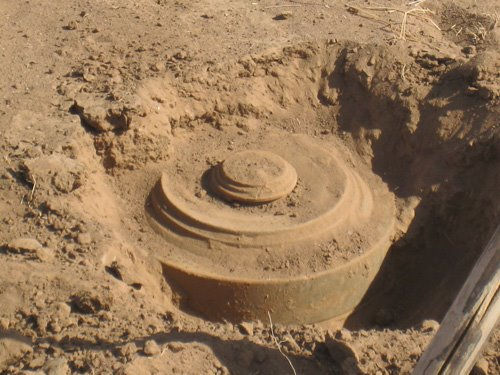

 Yesterday, the Court issued its judgment in the Albekov and others v. Russia case which may not only have been a landmark, but also a landmine judgment. Three family members of the applicants, all civilians, had been killed by landmines in a forest near the village of Akhinchu-Barzoy in Chechnya. One of them was bringing in his cattle and when he did not return, two other villagers went to look for him and also got killed by landmines. Russia claimed that the landmines had been planted by armed gangs. The authorities had, however, due to earlier incidents, been aware of the location of the mines. It was on that issue that the European Court focused when assessing the case under Article 2 (right to life): the fact that the authorities knew that the landmines were there was sufficient to give rise to a positive obligation under Article 2 ECHR. Further developing and refining an earlier judgment (Pasa and Erkan Erol v. Turkey of 2006), the Court has now made clear that in this context three kinds of obligations rest upon a State Party. At the very least the authorities should (1) mark and seal off an area of which they know that it contains landmines and (2) comprehensively warn people living in the vicinity of it. This is the minimal obligation. Depending on the circumstances the Court would then look also at a third factor: endeavours to locate and deactivate the landmines. In this case, the Court unanimously found a violation of Article 2 for the state failure to protect the rigth to life. The case thus provides clear guidelines on how states should handle minefields.
Caught in a Minefield