


Dear readers, two different updates relating to earlier blogposts on here:
First, the recording of the very interesting webinar / public online talk of President Robert Spano, held last week, has now been put online on the iCourts website. A big thanks to the team in Copenhagen for making this available, also for future reference (and all the more so as the livestream was hampering for many viewers, so it recording provides for high-quality, buffering-free watching and listening). Warmly recommended, as Spano addressed a lot of topical aspects of judicial independence and answered questions coming in on Twitter from the audience.
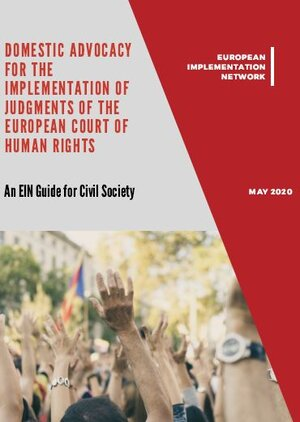
Also mentioned before, last month the European Implementation Network organised a webinar on effective domestic ECHR implementation. This has now also been put online. On that occasion, an EIN Guide for civil society on domestic advocacy for the implementation of Strasbourg Court was also launched. Accordign to its compilers, these are the contents:
‘The examples compiled in this guide show that, where NGOs have sought, identified and pursued opportunities for engaging with the authorities, where they have formed alliances with other civil society actors and used the media to drive implementation forward, they have managed to secure important human rights gains.
We hope that civil society actors in Europe will draw inspiration from the best practices and lessons learned presented in this toolkit. Because the conditions for effective implementation vary from country to country, from time to time and even from case to case, this guide does not provide a blueprint, one-size-fits-all approach to domestic advocacy for judgment implementation. Instead, it is conceived as a ‘menu’ of potential strategies, tools and actions that NGOs could take at the national level to push for the execution of judgments. The readers are encouraged to pick and choose those elements of this guide that are most relevant to them.
This guide is also a ‘living document’. It seeks to spark a wider conversation among civil society about how to use advocacy at the domestic level to push for the implementation of judgments. We therefore warmly invite our readers to send us feedback, and share their own experiences with domestic advocacy for the implementation of Strasbourg Court judgments with us. So please get in touch!’